Your transmission isn't failing — the computer controlling it is. We repair TCMs at the board level, restoring proper shifting and eliminating limp mode. Save 50–70% vs. dealership module replacement. All makes. All transmissions.
Warning Signs
Is Your Transmission Control Module Failing?
Vehicle stuck in limp mode
Transmission locks into 2nd or 3rd gear and won't shift, severely limiting speed and acceleration
Harsh or delayed shifting
Noticeable jerking, slamming, or long pauses between gear changes that weren't there before
Erratic or unpredictable shifts
Transmission skips gears, shifts at wrong RPMs, or hunts between gears repeatedly
Check engine light with P0700
The gateway code indicating your TCM has stored one or more transmission fault codes
Transmission slipping under load
Engine revs climb but the vehicle doesn't accelerate, especially on hills or during passing
No communication with scanner
Diagnostic tool cannot connect to the transmission module, indicating internal circuit failure
Vehicle won't shift out of park
TCM fails to release the shift interlock, leaving the vehicle immobile
Poor fuel economy with no other cause
incorrect shift points force the engine to work harder, burning significantly more fuel
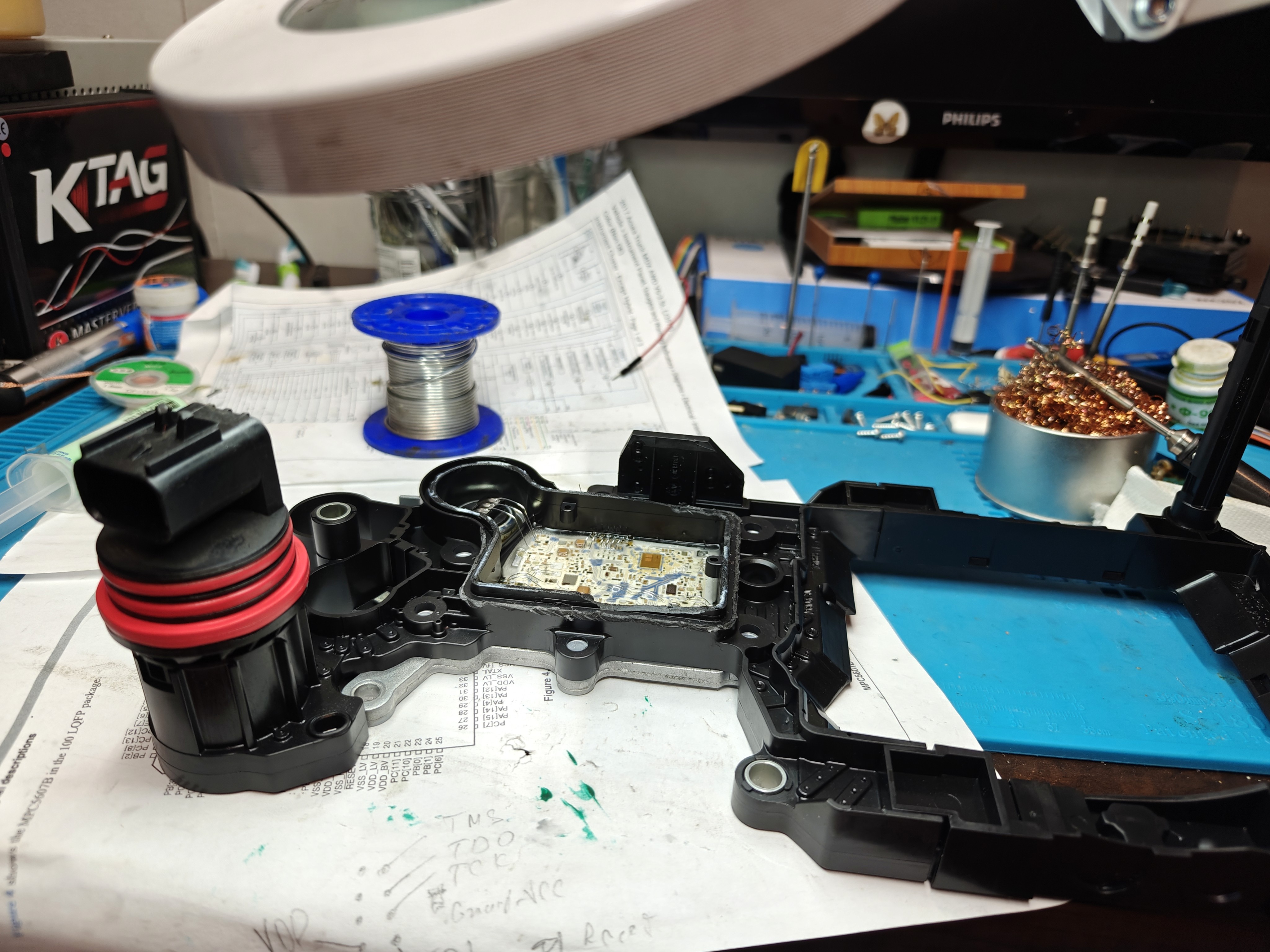
If your vehicle shows one or more of these symptoms, the problem is likely electronic — not mechanical. A proper TCM diagnosis can save you thousands by avoiding unnecessary transmission teardowns.
Smart Choice
Your Original Module, Preserved
Your TCM stores learned shift adaptations unique to your driving style and your specific transmission's wear pattern. A new or refurbished module erases all of that. Our board-level repair keeps your original calibration data intact — meaning your transmission shifts the way it always has, from the moment you get it back.
Fraction of Replacement Cost
Dealerships charge $800–$2,500 for a new TCM plus programming. Aftermarket replacements still need VIN coding and adaptation resets. Our repair restores your existing module for 50–70% less, with no additional programming fees and no compatibility surprises.
Faster Than the Alternative
New TCM orders can take days or weeks to arrive, especially for older or less common vehicles. Aftermarket units may ship from overseas. We repair most transmission modules within 24–48 hours once received — getting your vehicle back on the road faster than any replacement path.
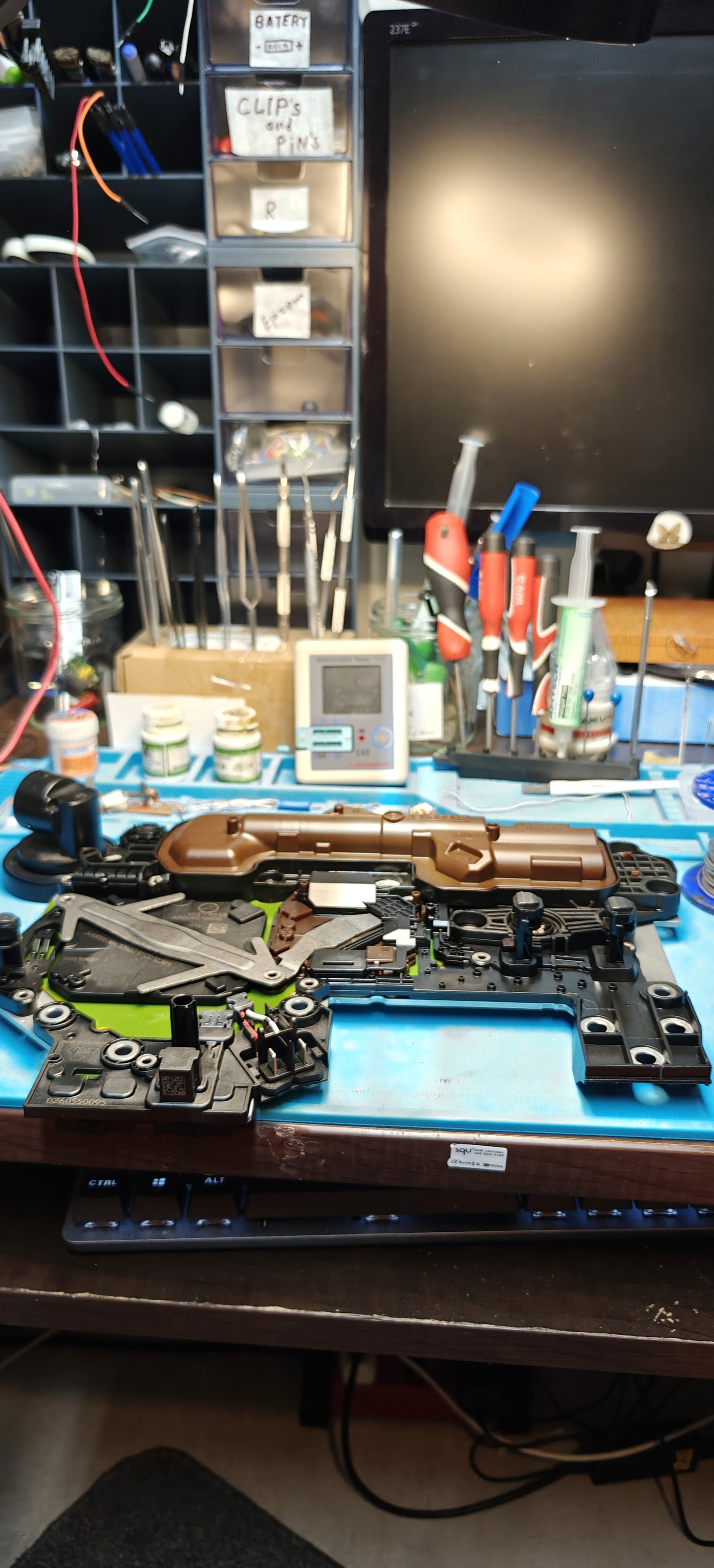
Most shops diagnose a faulty TCM and recommend full replacement. We open the module and repair it at the component level. Here is what that means in practice
Solenoid Driver Restoration
The TCM controls each shift solenoid through dedicated driver circuits on the board. When a driver fails, the affected gear becomes unavailable and limp mode activates. We test each driver against OEM specifications, replace failed components, and verify proper current delivery to all solenoid channels.
Power Supply Circuit Repair
Internal voltage regulators and capacitors degrade over time, especially under thermal cycling. When the power supply weakens, the processor receives unstable voltage and produces erratic shift commands. We rebuild the regulation stage with components rated for automotive temperature extremes.
Processor Communication Fix
When your scanner reports "no communication" with the TCM, the fault is usually a damaged CAN bus transceiver or corroded connector interface — not a dead processor. We isolate the failed communication chip, restore the data link, and verify connectivity across all vehicle networks.
Thermal Damage Restoration
Transmission modules often mount directly on the transmission case or sit inside the transmission housing submerged in fluid. Prolonged heat exposure degrades solder joints and semiconductors. We reflow compromised connections, replace heat-damaged components, and reinforce vulnerable areas.
Shift Pressure Sensor Repair
Internal pressure sensors feed real-time data to the TCM for adaptive shift control. Drift or failure in these circuits causes delayed engagement and harsh shifting. We calibrate each sensor path against factory specifications and replace components that fall outside acceptable tolerance ranges.
Connector and Trace Rebuild
Fluid contamination, moisture ingress, and vibration damage corrode connector pins and PCB traces over time. We clean affected areas under magnification, rebuild damaged traces with precision soldering, and apply protective conformal coating to prevent future corrosion and moisture intrusion.
Code
Description
Domestic Vehicles
Make
Typical TCM Issues
Asian Vehicles
Brand Name
Typical TCM Issues
European Vehicles
Brand Name
Typical TCM Issues

Real Customers, Real Savings
Don't just take our word for it. See how Module Masters has helped thousands of customers save money while getting their vehicles back on the road quickly and reliably.
FAQ'S
Find answers to common questions about ABS repair.
Can a faulty TCM really be repaired, or does it need to be replaced?
In most cases, yes — TCMs can be repaired. The most common failures are specific electronic components on the circuit board: solenoid drivers, voltage regulators, communication ICs, or degraded solder joints. We repair these at the component level, which restores full transmission control without replacing the entire unit. Only in rare cases of catastrophic physical damage or severe internal corrosion is replacement the only option — and we'll tell you that upfront before any work begins.
Is it worth repairing a TCM instead of replacing it?
How much does it cost to replace a transmission control module?
Do you offer TCM repair outside Calgary?
How do I know if my transmission problem is the TCM and not the transmission itself?
Will my vehicle drive with a faulty TCM?
Do I need to reprogram the module after your repair?
What is the difference between a TCM and a PCM?
How long does TCM repair take?
What about CVT and dual-clutch transmission modules?